

In brief
- We campaign for fair and balanced contracts, fair appearance fees and fair pay for every use of an author’s work
- We advocate for an industry that is welcoming of all and treats everyone respectfully and with high levels of professionalism
- We work with industry partners to break down barriers within the creative industries, to ensure diverse voices are heard, and to value all creative talent.
Contents
Fair pay and terms
The UK publishing industry is thriving both nationally and internationally. In 2025, the total revenue was £7.4 billion, up by 3%. But while the industry thrives, research shows that sustaining a career as an author is increasingly challenging and authors struggle to earn a living.
Authors face long-standing challenges such as declining earnings, low or unpaid work, the growing devaluation of creative labour and also poor contract terms and the inequality of bargaining power.
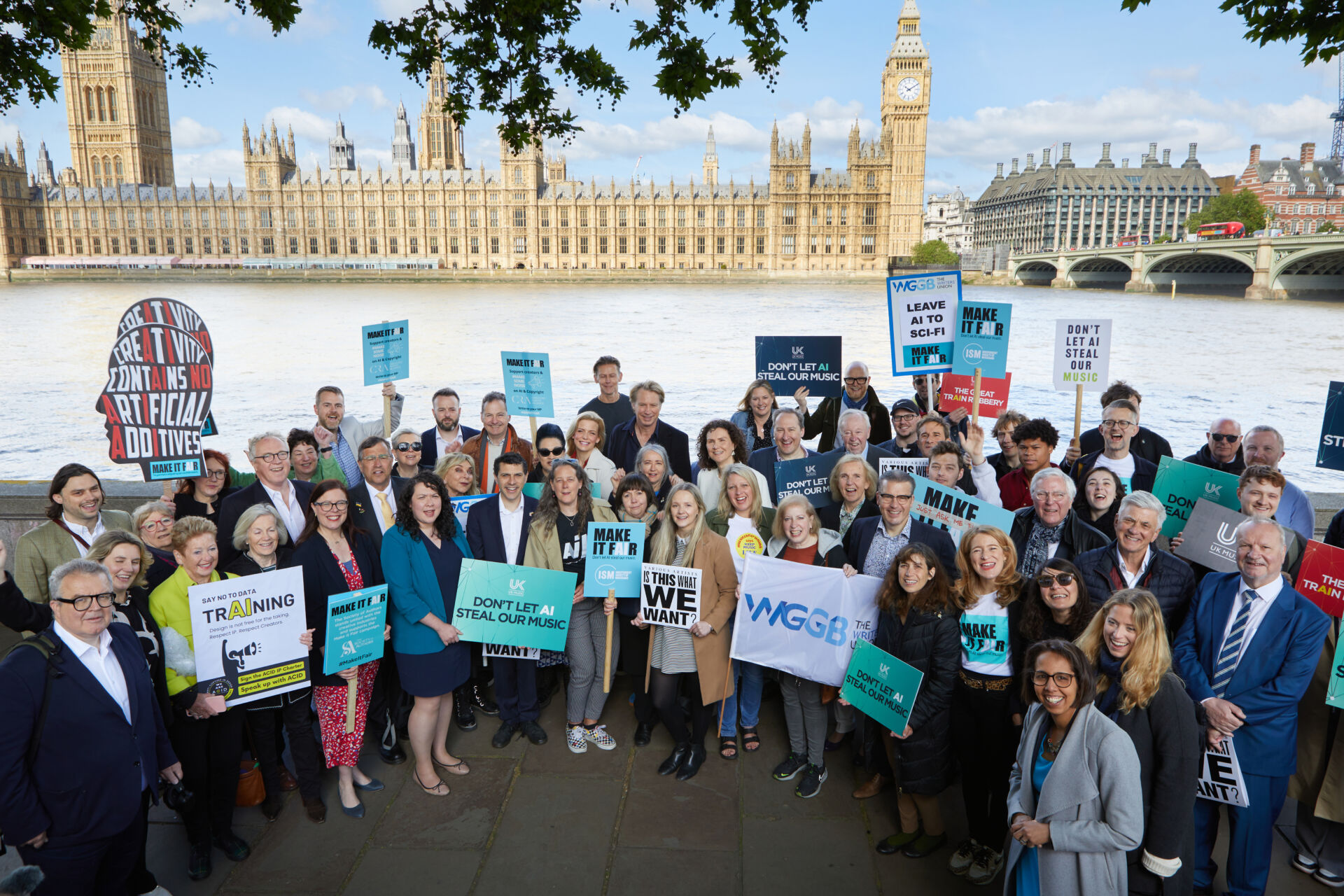
The rapid development of generative artificial intelligence (gen AI), this is creating new threats to authors’ livelihoods, affecting work opportunities and already resulting in loss of income.
It is essential that the principles of fair pay, fair terms and fair treatment are central in all contracts if we want an industry that values and recognises the importance of creative work.
The publishing industry should also be open to people from all backgrounds, and reflect the diversity of our society. For this to happen, creative careers need to be accessible, sustainably paid and inclusive.
We campaign for:
- Fair and balanced contracts with a limited grant of rights, appropriate payment provisions and strong termination provisions.
- Fair appearance fees: authors to be paid fairly throughout all aspects of their career, i.e., festival appearances, school visits, public speaking activities, etc.
- Fair pay for every use of an author’s work, including for new modes of exploitation such as streaming or new uses by Gen AI systems.
How we work:
- We engage with industry partners such as the Association of Authors’ Agents, Publishers’ Association and Independent Publishers Guild and also with individual agents and publishers to discuss contract terms and improve industry practice.
- We support campaigns such as the Creators’ Rights Alliance’s Pay the Creator campaign and the International Authors Forum’s Ten principles of fair contract terms.
- We respond to industry and government consultations and inquiries on topics such as authors’ earnings, Public Lending Right (PLR) and contract terms to ensure that authors’ interests are represented.
- We advocate for policy and legislative changes that protect authors’ rights to fair remuneration, including reforms to increase the PLR funding pot and to broaden the scope of the scheme to include all libraries.
Further reading
Writers’ Contracts in the European Book Sector: The EWC Report 2024 – EWC – European Writers Council
Creators of comics struggling to survive despite a thriving industry – The Society of Authors
Fair treatment
The publishing industry is often described as opaque, complex and highly competitive. While many publishers provide transparent submission guidelines, invest in author handbooks and experience surveys for contracted authors, many authors still face challenges before and after publication: protracted and challenging negotiations, inconsistent communication and delayed answers, lack of budget to champion and promote a work, and persistent ‘ghosting’ issues.
Professionals across the industry report under-resourcing and high staff turnover which can have a significant impact on an author’s experience. Authors can feel alone and unsupported in their publishing journey.
The SoA advocates for an industry that is welcoming of all and treats everyone respectfully and with high levels of professionalism.
We call on the industry to adhere to the three principles established in our Author Care toolkit, which should guide every professional relationship:
- Transparency
- Support and inclusion
- Respectful communication
Through long-standing campaigns, we advocate for an industry that celebrates, values and champions every talent within it. Visibility and recognition for all types of authors including translators, illustrators and ghostwriters, with appropriate credit, acknowledgments and payments, are essential.
Further reading
Ghosts Are Real in celebrity-authored children’s fiction – The Society of Authors
#TranslatorsOnTheCover – sign the open letter – The Society of Authors
#PicturesMeanBusiness – Give Illustrators Credit
Campaigning for fair work in Scotland – The Society of Authors
Call to support a Culture Act in the next Scottish Parliament – The Society of Authors
Equity, diversity and inclusivity
Industry commitment to inclusivity among creators, audiences and industry professionals is essential for building a strong creative economy and ensuring that the benefits of cultural participation are shared by all.
In order for these social and economic benefits to be spread throughout all social groups, it is imperative that the culture on offer reflects the rich diversity of our society and a plurality of stories being told. If audiences feel that culture reflects and speaks to their own experience, they are more likely to engage with reading and more readers will develop a lifelong reading habit.
While progress has been made over the last decade, improvements are needed to overcome the barriers. Recent reports and research clearly demonstrate that long-standing issues around lack of representation and accessibility to the industry are very much alive, some even worsening, and in need of urgent attention:
- The 2022 ALCS author earnings survey show that the gender gap is widening, with men earning 41% more than women (against 33% in 2016/2017) and that the pay for Black and multi-heritage authors is 51% (in real terms) lower than for white authors.
- The publishing workforce is also less diverse than in 2022 in terms of ethnicity and socio-economic background, according to the 2024 UK publishing working report from the Publisher Association. The next research is scheduled to be published later in 2026.
- The Centre for Literacy in Primary Education revealed a significant reduction in the number of children’s books with a racially minoritised character in 2023, in contrast to previous years’ increases.
- Although there have been increases in the number of disabled people working in publishing, they are still underrepresented in the workforce, according to the Publishers Association.
The SoA co-created the Book and Publishing Industry’s Professional Values and we call on the industry to adhere to the ten principles. We work with industry partners to open up the creative industries more widely, to break down barriers, to welcome new entrants and to value all creative talent.
We also call on the industry to adhere to the three principles established in our Author Care toolkit, which should guide every professional relationship: transparency; support and inclusion and respectful communication.
We work through the cross-industry equity, diversity and inclusion (EDI) forum to drive progress on access and inclusion in the publishing industry. We are in discussion with the Creative Industries Independent Standards Authority to bring their work to the publishing industry.
We work with agents and publishers to make the industry more accessible and inclusive to all. And we provide practical support and resources for authors who may face barriers to accessing the industry. For example, we worked with our Authors with Disabilities and Chronic Illnesses (ADCI) network to design an Access Form template which makes it easier for disabled authors, neurodivergent authors and authors with chronic health to request reasonable adjustments.