
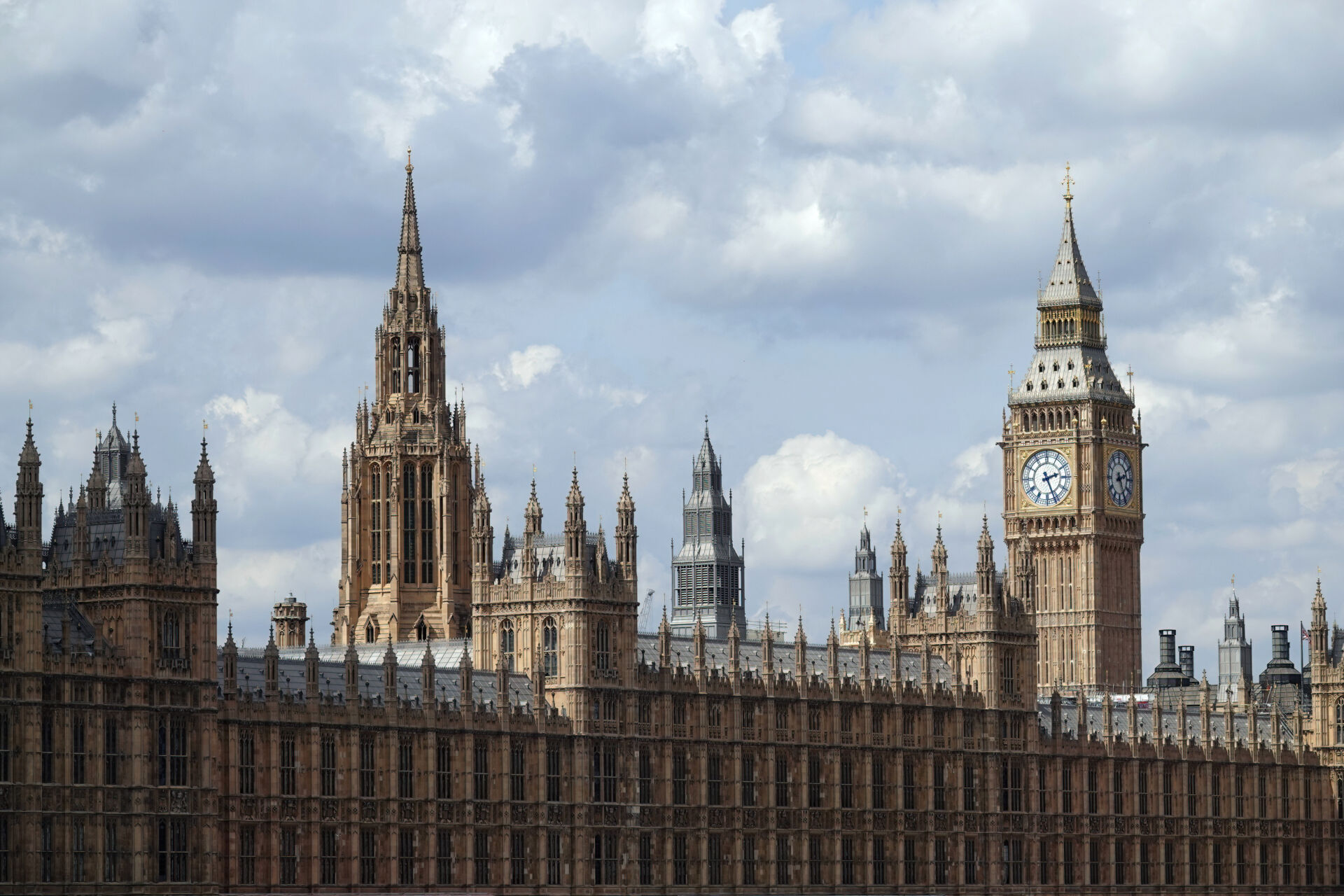
On Monday the Government released an interim update on its approach to artificial intelligence and copyright, ahead of more detailed economic analysis and policy proposals due before 18 March 2026.
The statement comes as part of the requirements set out in the Data (Use and Access) Act, which became law over the summer and follows the Government’s public consultation on copyright and AI which closed in February and prompted a significant response from authors.
The Government took the unusual step of setting out a preferred policy position, proposing an “opt-out” system that would allow AI companies to use copyright-protected works for training unless rights holders actively objected. Organisations across the creative industries, including the Society of Authors (SoA), strongly opposed this approach, culminating in the Make it Fair Campaign which achieved large scale support.
This week’s statement highlights the scale of opposition to weakening copyright protections. More than 11,500 responses were submitted to the consultation. Of those respondents, 88% supported option 1 — which would require copyright licences in all circumstances.
Other options attracted far less backing:
- 7% supported leaving copyright law unchanged (option 0)
- 3% favoured a copyright exception for text and data mining (TDM) with rights reservation (option 3)
- Just 0.5% supported a broad exception with no rights reservation at all (option 2).
The consultation also revealed strong, cross-sector backing for statutory transparency measures that would oblige AI developers to disclose what material has been used in training, helping creators license their work effectively.
Throughout 2025 the SoA and its members have lobbied Government to uphold and reinforce existing copyright law, introduce robust transparency obligations, and ensure creators are informed when their work is used to train large language models.
Responding to this week’s statement, the SoA’s Chief Executive, Anna Ganley, said:
“It’s been more than a year since the Copyright and AI consultation closed, and still no meaningful action. In that time, we’ve seen the scale of tech companies’ use of pirated and scraped training data exposed in the public arena and in multiple legal cases.
“Authors have made their views clear: we won’t be quiet until we are fairly paid for work, and we will not accept a world in which tech companies enjoy free rein over the creative labour of others.”
The statement also provided an update on how the Government is convening working groups to consult with creatives and tech. Whilst the Society of Authors did attend a roundtable with the Secretaries of State at DSIT and DCMS in the summer, we did not secure a place on the Technical Working Groups convened in recent weeks. On this, Anna Ganley said:
“It has also been deeply disappointing to see how few creator representatives have been able to participate meaningfully in the Government’s recent Technical Working Groups. Our rough calculations show that only five of the sixty attendees directly represent creators. The majority are large corporate rightsholders controlling licensing, distribution, and copyright exploitation alongside a significant number of tech platforms shaping the infrastructure, AI development, and distribution channels.
“All of this is profoundly worrying for those of us solely championing the rights of authors and creators, the lifeblood of the UK’s creative industries. We urgently need a clear signal that this Government will reject a TDM exception and uphold the core principles of copyright. As we move into 2026, the power of human authorship and creativity will be more important than ever.”
The Society of Authors will continue to engage actively with Government while campaigning to ensure copyright and remuneration are fully protected.
The Government’s full statement and detail of the Technical Working groups are available here.
Further information about the Society of Authors’ work on AI can be found on its campaign page.