

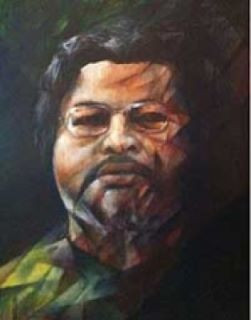
A researcher by profession and inclination, employed at The Open University, UK. Current areas of interest are explored in recent publications, which include:
- Collective Principles and the Formation of the Internet: Cultural Influences and Historical Impacts (Beginnings to 2010) (Cultural Computing Series, Springer, 2025)
[Five decades after the internet’s technological structure began to be erected, and three decades after engagement with it started burgeoning, an active and global collective formation has grown upon it. This collective formation is dubbed the ‘Internet Polity’ here and is distinguishable from, and yet embedded within, real-world collectives. Despite divergences and conflicts, its organization is based on certain shared principles and its culture characterized by distinctive discursive practices. This book examines how the Internet Polity developed until 2010, in terms of the technological and cultural features that have supported it. Accordingly, the Internet Polity’s emerging prospects are considered.] - Co-authored with Peter H.Tu. The Practical Philosophy of AI-Assistants: An Engineering-Humanities Conversation. (World Scientific Europe, 2023)
[The book is presented as a formal conversation between an AI engineer, Peter, and a humanities researcher, Suman. The argument considers ground rules for designing a personal AI Assistant, i.e. an AI system that could act as a friend, consultant and confidante for every individual and be integrated in everyday life. These ground rules pertain to four areas of AI development: recognition and identification, communication, explanation, and civility.] - Political Catchphrases and Contemporary History: A Critique of New Normals (Oxford University Press, 2022)
[An historical account of the period 2001-2020 is presented by focusing on the shifting connotations of certain political catchphrases and words. These allow for a linked-up narrative covering areas such as politics and policy, business and investing, austerity and inequality, identity, climate change, crowd protests, flexible working and online education. Key junctures are 9/11, the 2002 dot-com crash and the 2007-2008 financial crisis, the Occupy movements of 2011-2012, China’s economic policy from 2014 onwards, and the COVID-19 outbreak in 2020. Half the book is devoted to the unusually pervasive usage of the catchphrase ‘new normal’. Chapters are also given to ‘we are the 99%’ and the catchwords ‘austerity’ and ‘resilience’.] - Co-authored with Richard Allen, Maitrayee Basu, Fabio Akcelrud Durão, Ayan-Yue Gupta, Milena Katsarska, Sebastian Schuller, John Seed, Peter H. Tu, Social Analysis and the COVID-19 Crisis: A Collective Journal (Routledge 2020).
[This book is a collective journal of the COVID-19 pandemic. With first-hand accounts of the pandemic as it unfolded, it explores the social and the political through the lens of the outbreak. Featuring contributors located in India, the USA, Brazil, the UK, Germany, and Bulgaria, the book presents us with simultaneous, multiple histories of our time. The volume documents the beginning of social distancing and lockdown measures adopted by countries around the world and analyses how these bore upon prevailing social conditions in specific locations. It presents the authors’ personal observations in a lucid conversational style as they reflect on themes such as the reorganization of political debates and issues, the experience of the marginalized, theodicy, government policy responses, and shifts into digital space under lockdown, all of these under an overarching narrative of the healthcare and economic crisis facing the world.] - Digital India and the Poor: Policy, Technology and Society (Routledge India, 2020)
[The phrase ‘Digital India’ here refers to an aspiration for progressive social development through technological means, particularly post-2000. Within that broad context, this study explores the ways in which poor people and the condition of being poor are discussed, represented and purposively used in public discourses. This area is addressed by turn from a top-down perspective, in relation to initiatives bearing upon the population generally, and from an on-the-ground perspective, taking in intimate spaces and accounts of lived observations and experiences. For the former, education technology experiments in Indian ‘slums’ and a series of governmental ‘financial inclusion’ initiatives (including PMJDY, Aadhaar and demonetisation) are analysed; for the latter, the status of domestic workers, restructuring of domestic work and the place of technology therein are examined.] - Co-authored with Peter H. Tu. What is Artificial Intelligence? Conversation between an AI Engineer and a Humanities Researcher (World Scientific Europe, 2020)
[This book engages with the title question by putting two standpoints into conversation. These are different in their disciplinary groundings – i.e. technology and the humanities — and also in their approaches – i.e. applied and conceptual. The two standpoints are those of the two authors. Peter is an AI engineer: his approach to the question is in terms of the functional composition of what is understood as AI (how to make it work). Suman is a humanities researcher: his approach is in terms of how AI is currently understood and spoken of in different walks of life (what do people mean when they say ‘AI’) – including in academic and policy circles.] - Co-authored with Milena Katsarska, Theodoros Spyros, Mike Hajimichael. Usurping Suicide: The Political Resonances of Individual Death (London: Zed, 2017)
[Looking closely at specific acts of suicide that bore wider political resonance, such as Mohamed Bouazizi’s self-immolation during regime change in Tunisia to Dimitris Christoulas’s public shooting at a time of increased governmental austerity in Greece, this book focuses on the reception these acts have produced rather than the individual motivations. Exploring how a singular act can become endowed with collective significance, Usurping Suicide will be of interest to readers concerned with the intersection of public interests and private actions and the power of media in the framing of these events.] - Philology and Global English Studies: Retracings (London: Palgrave-Macmillan, 2015)
[This book retraces the formation of modern English Studies by departing from philological scholarship along two lines: in terms of institutional histories and in terms of the separation of literary criticism and linguistics. It is argued that the full potential of the discipline’s global scope and pluralistic formation can only be realized by departing further from philology rather than returning to it – and that this is possible only by engaging with philology rather than by forgetting it. Part 1 outlines the complexities and coherent features of philological scholarship. Part 2 examines historical accounts of the discipline’s moves away from philology in several institutional contexts (UK, USA, India, post-1990 EU). Part 3 explores the gradual bifurcation of English linguistics and literary studies, departing concurrently from philology and from each other.]