

Publications:
Books
Rob Roy: Scotnote (ASLS: Glasgow), 2009.
Local Hero: Scotnote (ASLS: Glasgow), 2010.
Lost Bodies, novel, (Kennedy and Boyd: Glasgow), 2011.
The Glass Half Full: Moving Beyond Scottish Miserablism, co-authored with Eleanor Yule, (Luath: Edinburgh), 2014.
The Anti-hero’s Journey: the Work and Life of Alan Sharp, critical biography, (Peter Lang: Zurich), 2023.
Short stories, extracts, opinion pieces, reviews
’A Caller’, short story, Northern Light, (Aberdeen, 1980); ‘Best Man’, short story in ‘Scotia Writers Prize: A Spiel Among Us’, (Mainstream, Edinburgh, 1990);‘Perfection’, novel extract, Gutter 4, (Glasgow, 2011); ‘Expressions’, short story, West Coast Magazine (Glasgow, 1982) ; ‘Communications’, novel extract, West Coast Magazine (Glasgow, 1993); ‘From a Western Empire: the ‘Isms’ of Alasdair Gray’, essay, Chapman 97, (Edinburgh, 2000); ‘Inkerman’, long short story, Ecloga, (Strathclyde, Glasgow, 2005); ‘Skin’, novella opening, Valve, (Strathclyde, Glasgow, 2011); ‘On the Beach’, short story, Valve, (Strathclyde, Glasgow, 2012); ‘The Other’, short story, Word Jig: New Writing from Scotland, (Hanging Loose Press, New York, 2003), ‘Under the Influence’, short story, A Little Touch of Cliff in the Evening: New Writing Scotland, (ASLS, Glasgow, 2011); ‘Best Man’, The Scotia Writers’ Prize, (Mainstream: Edinburgh, 1990); Reviews: The Bottle Imp (2023-5); ’Language, Freedom, Voice’, Declarations: Scottish PEN (Scotland Street Press: Glasgow, 2020); ‘The End of the World’, novel opening, Laldy, (Paisley: 2018); ‘Publish and Perish’, Scottish PEN website/Byline Scotland (2024), opinion, Byline Scotland, 2024; ‘Instrument of Authority’, 26 Treasures (Unbound Press), 2012.
Feature article:
‘The Tannahill Weavers’, The Living Tradition, (Kilmarnock), 2003.
Non-fiction:
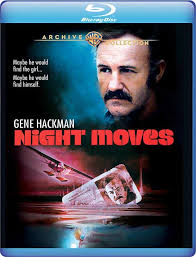
’Afterword’ in Night Moves by Alan Sharp (novelisation, 2nd edition), (Plumeria Pictures, LA., August, 2025).
Academic:
‘Location, dislocation: film and the Trossachs’. Chapter in Literary Tourism: The Trossachs and Walter Scott, (ASLS), 2012.
‘Wattie Goes to Hollywood: Scott, Scotland and Film’. Article in The Bottle Imp, (Glasgow), 2013.
‘The Noctes Ambrosianae and the Highlands’. Chapter in Gael and Lowlander in Scottish Literature: Cross-currents in Scottish Writing in the Nineteenth Century, Occasional Papers 20, (ASLS, Glasgow), 2015.
’Making the Ordinary Extraordinary: Collaborative Wayfaring and Creative Writing’. Chapter in Exploring Creative Writing: Voices from the Great Writing Conference, (Cambridge Scholars) 2016.
Reviews/testimonials for Lost Bodies (novel), Kennedy and Boyd (Glasgow), 2011.
‘Psychological thriller with terrific pacing, realistic dialogue and finely drawn characterisation… David Manderson’s debut novel is both a literary novel and a compelling page turner’ (Bookrambler), June 2011.
‘Manderson is able to control expertly, in his use of focused and fragmentary narrative, the unfolding sense of the ordinariness of the monstrous, and the self-justification of evil… this is incredibly powerful stuff.’ (Paul Wright, New Writing in Education, 2012.)
Forensic attention to detail…
(Reviewed in United Kingdom 31 March 2012 by Douglas T. on Amazon.)
’One of the strengths of this book is how it very slowly and subtly subverts the reader’s initial impressions as we listen to the narrator’s voice. But to review it properly means having to discuss the whole scope of the narrative from start to finish.
I’m not the sort of person who normally buys crime fiction. Nor, I have to confess, have I been much of a fan of the whole James Kelman-influenced school of what Will Self wryly refers to as the “Scottish hard man novel”. Kelman in turn was influenced by James Joyce who first hit on the idea of describing in minute detail every second of a day from the perspective of the interior of a narrator’s mind.
Ironically this “stream of consciousness” storytelling technique is much more appropriate in David Manderson’s book, for me, than it is for the humdrum events of many of Kelman’s books, and the device progressively creates a gripping hold on the reader. The narrator of “Lost Bodies” is very gradually revealed as a serial killer of the most vicious and terrifying kind. The horrid colloquial phrase “sweating like a rapist” often comes to mind as we find our anti-hero constantly and narrowly evading the suspicion of friends, colleagues and police officers.
I normally disapprove of publishers distorting the content of a book on its cover blurb in order to boost sales, and indeed the tactic can often back-fire through disappointing readers and enraging reviewers. But in this case I can see a legitimate reason why the phrase “serial killer” and even the notion that the murderer tells the story, has been withheld. Oddly, and brilliantly perhaps, for a book about a Glaswegian Jack-the-Ripper, almost all sex and violence are completely absent from this book, forcing us to concentrate entirely on the psychological profile of a human being capable of such acts. Fans of Horror, looking for blood and guts will go away empty-handed, but those wanting to be deeply unsettled as to their perception of the human condition, will find much to make them think and shiver.
Who was it said that “the hallmark of true evil is its banality”? The propaganda posters of Hitler’s Germany always come to mind at those words, but Manderson also seems to have taken them to heart as the key to the strange enigma of how murderous monsters can so perfectly camouflage themselves within ordinary urban or suburban life.
There are brilliant opportunities for biting social comment in this, which Manderson exploits subtly. Materialistic well-off neighbours boast about their foreign holidays and expensive cars and gadgets while completely missing the horror breathing right next to them, dropping clues like a wounded animal dying to be caught.
There is a key moment in this book when our anti-hero says:
”Christ if they only knew. One like him on every street-corner”.
This is Manderson’s fundamental message, driven home with the narrator’s constant suburban gardening and apparent care for his poorly wife. As a study of evil, it could almost stand beside James Hogg’s Confessions of a Justified Sinner, but I suspect that a police psychologist would confirm that its insights into the schizoid hypocrisies of a mass murderer are also highly relevant to real life contemporary cases.
The sexual aspects of the attacks, as I’ve said, are missing from the book, as if some kind of self-censorship is going on, and yet this is stream-of-consciousness, not a written confession in the manner of say: John Banville’s Book Of Evidence (with which this book makes an interesting comparison). There may be a clue to a form of schizophrenia there, or at least a dangerous split and distancing between different halves of one mind.
Perhaps Lost Bodies does not seem at first to aspire to the “Literary” heights of Banville or (supposedly) Kelman, but it opts instead for an incredible rigour and discipline of method, and integrity towards its core material. The effect is claustrophobic and overwhelming. However, unlike overt Horror, Lost Bodies’ message is an important and heart-felt one: that we are complacent if we think that murderers and rapists are somehow alien to ourselves. All men will find themselves glancing, at times furtively, at the more appealing curves and glimpses of flesh of passing women’s bodies. From this disturbing undertow, Manderson constructs a carefully argued accusation that we are all capable of terrible things, given the wrong impetus, the wrong upbringing, the wrong opportunity.
The insidiously sprinkled women-hating thoughts of our anti-hero are kept back until well past half-way through the book, just as well since I for one would find it hard to willingly begin a book I knew contained them. Deaths read about in the papers, ones he has caused, are dismissed on grounds like “Kids were born every day, to people who didn’t want them, beat them, gave them away. Life went on.” We are left to feel the dismay and revulsion that our killer seems immune from. His self-pity and protestation towards the end that he has “never done anything wrong in his life, never hurt anyone”, even as he approaches capture, seem absurd, laughable, and yet may well be ultimately consistent with the banality and mental bifurcation of an ex-army loner whose compulsion to kill lies beyond his own capacity for self-analysis.
This is a gripping book, but also a responsible one, armed with which we might all stand a better chance of understanding evil, or at least pathological killers. As the news bulletins keep showing us, darkness wears new and friendly faces every day, through which we need to learn to see more deeply. Expertly crafted book in terms of plotting and characterisation, “Lost Bodies” delivers directly to our sedate suburban doors the unpalatable message that monsters are humans waiting to be understood, and humans are monsters waiting to happen.’
‘I read it with the greatest pleasure.’ (Zoe Wicomb, novelist and short story writer.)
‘A powerful and uncomfortable narrative… A psychologically rich study… and a gripping narrative.’ Tom Pow (poet, novelist, young adult author).
Reviews/testimonials for The Anti-hero’s Journey (non-fiction)
’’I’m so grateful for the work and devotion you’ve put into this.’ Lem Dobbs, screenwriter The Limey, Dark City.
’This labour of love is everything a critical biography should be, more than capable of restoring Sharp’s reputation, giving him his rightful place in both Scottish literature and Scottish screen writing history.’ Carl MacDougall, novelist, editor, short stories, memoir.
’If Alan Sharp’s career was a unique one within modern Scottish culture, it has proved an underexplored one within modern Scottish Cultural Studies. The Anti-hero’s Journey remedies that collective oversight.’ Jonathan Murray, Senior Lecturer, Edinburgh College of Art.
’Sharp is one of my screenwriting heroes… [It is] deeply gratifying to see his life celebrated and historicised.’ Howard Rodman, screenwriter, professor, former President Writers Guild of America (West).
’It’s a cracker of a good read. I’m delighted to feature this as volume 13 in the seriously brilliant series for Peter Lang that I have the privilege to edit.’ Valentina Bold, writer, researcher, series editor.
’Author hopes to put Alan Sharp’s work back in Spotlight’, Greenock Telegraph, 9 July 2023.
‘For the first time, David has made the progression of Sharp’s career across multiple genres visible in a single piece of research’, Eleanor Thom, novelist. (‘If you don’t go away you can’t come back: Rediscovering the writing of Alan Sharp’, Review, Bella Caledonia, (2 June 2023).
’In this splendid book, writer David Manderson provides a detailed critical account of the writer’s work and a compelling case for the importance of Sharp’s contributions to literature, radio drama, television drama and cinema.’ https://ragmansbugle.wordpress.com, Gordon Gibson, Ragman’s Bugle, 6 October 2023.
‘So glad to have worked on this book!’ Lucy Melville, Global Publishing Director, Peter Lang Publishers.
’I hope this book does well. It deserves to.’ Alan Riach, Professor of Scottish Literature, Glasgow University.
’Manderson’s book demonstrates that Sharp’s oeuvre, including his film scripts, is that of a psychologically acute writer, and that he never lost his writerly integrity… [He] justifiably restores Sharp to the canon of 20th century Scottish writing… My choice for Scottish book of the year.’ Mario Relich, Scottish Affairs, Vol. 33, Issue 2, May 2024, full text: https://www.euppublishing.com/doi/abs/10.3366/scot.2024.0503
’It is a real pity that Sharp’s bold reinterpretation of Burns for the twenty-first century was never realised… Manderson is ideally placed to introduce us to material on Burns left behind by Sharp…’ Ronnie Young, Editorial: The Burns Chronicle, September 2025.
’Thanks to Dr David Manderson for sharing his expertise on Sharp with us.’ Colin McIlroy and Paul Magrati, editors: A Green Tree in Gedde, (Association for Scottish Literature Annual Volume 55, Glasgow, 2026.)
Reviews: ‘From Greenock to Hollywood’ film season, September 2023, Glasgow Film Theatre
’Some great stuff is happening in Scottish cinemas in September. I’m particularly excited for a mini-Alan Sharp season retrospective @glasgowfilm. Very much looking forward to seeing Ulzana’s Raid and Night Moves – two of my fave films – on the big screen’, https://www.theskinny.co.uk/film/film-events/scottish-film-events-september-2023, Jamie Dunn, The Skinny, 31 August 2023.
’Great night @gft watching Night Moves, part of the Alan Sharp retrospective’ @endlessrich
Review: ‘From Greenock to Hollywood’: Beacon Arts Centre, Greenock, Thursday 18th September, 7-8 p.m.
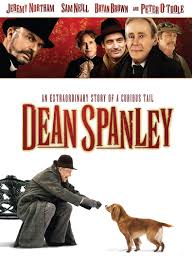
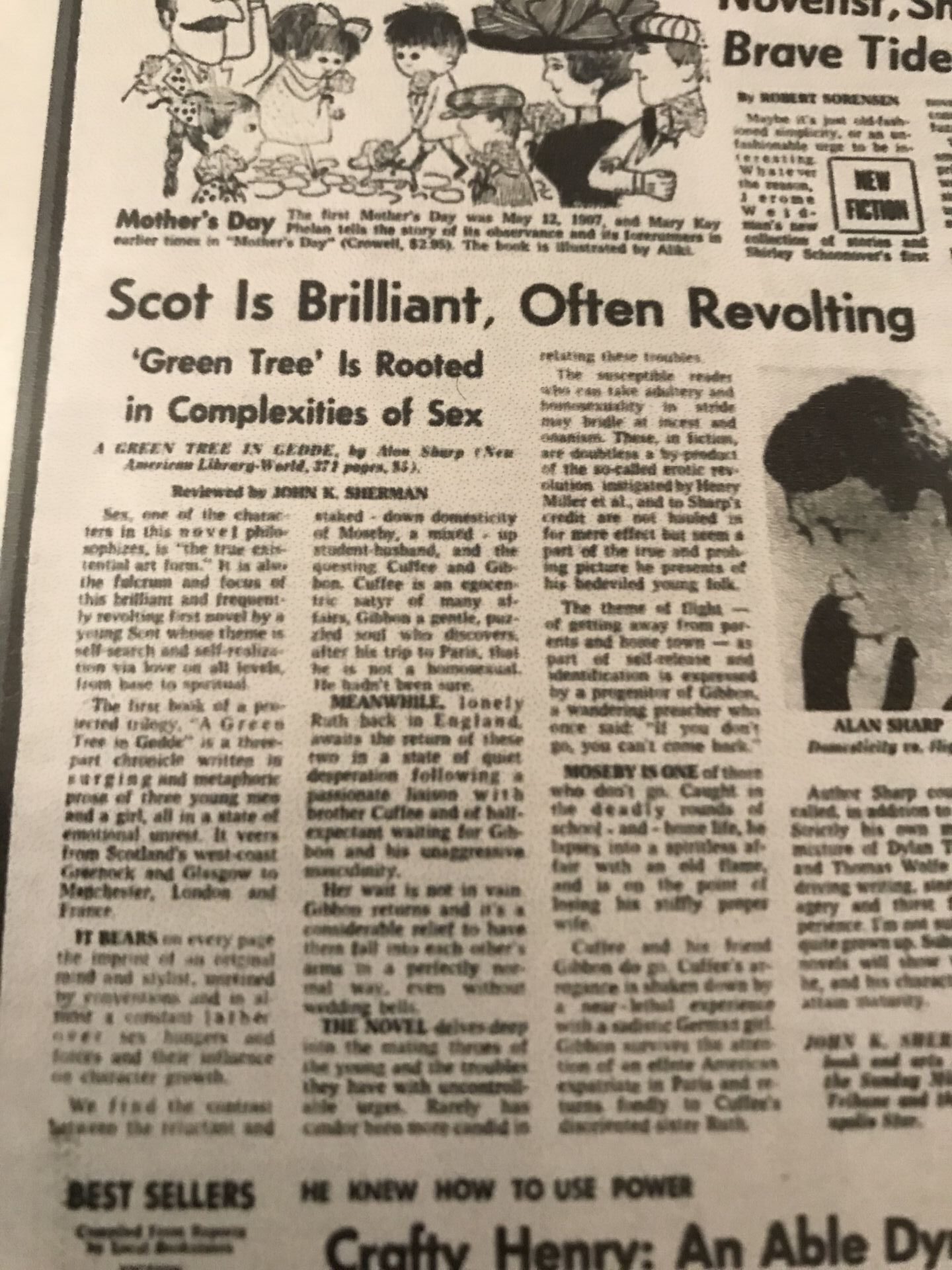
David Manderson and Matthew Gear present a talk about one of Scotland’s greatest novelists, playwrights and screenwriters. Featuring clips from several of his films, including Night Moves, The Hired Hand, Ulzana’s Raid and Dean Spanley, Matthew and Dave attempt to describe the astonishing career of one of Scotland’s most prolific and successful writers. From his sensational first novel, A Green Tree in Gedde, to his later years creating the screenplays for Scotland’s greatest stories, including Rob Roy, The Beach of Falesa and Burns, Sharp – the adopted son of a shipyard worker – left his working class background behind to become one of Scotland’s greatest writers in London, Hollywood and New Zealand.
Both presenters have written extensively on Sharp and outline the high points and setbacks of his unique career in television and film.
Articles
’Leela Soma obituary: Indian-Scottish novelist who created DI Patel, an investigator as worthy as Rebus or Laidlaw’, The Herald, 7 January, 2023.
’Carl MacDougall obituary: Novelist at the forefront of revolution in Scottish Writing’, The Herald, 22nd April, 2023.
’Wattie Goes to Hollywood: Scott, Scotland and Film’, The Bottle Imp, May 2013, https://www.thebottleimp.org.uk/2013/05/wattie-goes-to-hollywood-scott-scotland-and-film/
‘Publish and Perish: the state of the arts in Glasgow’, Scottish PEN website, https://scottishpen.org/publish-and-perish-the-arts-in-glasgow-today
’Language, Freedom, Voice’, Scottish PEN: Declarations: on Freedom for Writers and Readers: Anniversary of the Treaty of Arbroath, Scotland Street Press: 2020.
’Publish and Perish: The arts in Glasgow today: a city’s creative heart in peril from funding cuts’, Byelines Scotland, London, 21 December 2024, https://bylines.scot/lifestyle/publish-and-perish.
’Afterword’ in Night Moves by Alan Sharp (second edition), Plumeria Books (August, 2025).
’Promiscuous Sympathies: Alan Sharp and Robert Burns’, Burns Chronicle:134.2 (2025), 145-147, DOI: 103366/burns, 2025, 0142, Edinburgh University Press, www.eupublishing.com/burns
Article: ‘Twentieth-Century Urban Scottish Literature’, The Bottle Imp, June 2026.
Reviews in The Bottle Imp and other publications
’Crombie Saunders: Collected Poems’, edited by Donald Goodbrand Saunders, ‘The Bottle Imp’, August 2022.
’Portrait’ by Tracy Patrick, ‘The Bottle Imp’, March 2023, https://www.thebottleimp.org.uk/2023/03/portrait-by-tracy-patrick/
’Underwood’ by Stewart Conn, ‘The Bottle Imp’, July 2023, https://www.thebottleimp.org.uk/2023/07/underwood-by-stewart-conn/
‘Dreams of Scottish Youth: a Seventies Odyssey, Vols 1 & 2’ by Graham Fulton, ‘The Bottle Imp’, November 2023. https://www.thebottleimp.org.uk/2023/11/dreams-of-scottish-youth-a-seventies-odyssey-vols-1-2-by-graham-fulton/
Already, Too Late by Carl MacDougall, ‘The Bottle Imp’, April 2024.
Two Worlds by David Daiches, PEN International, May 2024.
Blank Pages by Bernard MacLaverty, ‘The Bottle Imp’, Autumn 2024.
Cinema, Culture, Scotland: Selected Essays by Colin McArthur, ‘The Bottle Imp’, ed. Jonathan Murray, May 2024.
Lost People by Margaret Elphinstone, ‘The Bottle Imp’, Spring 2025.
Duck Feet by Ely Percy, ‘The Bottle Imp’, Spring 2025.
The Absent Heart by Ali Bacon, ‘The Bottle Imp’, November 2025.
Retrovival by Douglas Thompson, ‘The Bottle Imp’, Spring 2026.
King of the Action Thriller: Films from the Mind of Alistair MacLean, by Brian Hannan, (McFarland) ‘The Bottle Imp’, June 2026.
A Rabble of Glints: poems by Charlie Gracie, Mairi McLaughlin and Donal McLachlan, Red Squirrel Press (Biggar), in ‘ The Bottle Imp’, October 2026, forthcoming.
Edinburgh Biographical Dictionary of Scottish Writers: entries on Raymond Friel, Thomas Healy, Alan Sharp, Neal Ascherson, Frederic Lindsay, Lorn McIntyre, Hogh C. Rae, Rab Wilson, Roddy McMillan, Bud Neill, John Hodge, Christopher Rush, Raymond Friel, Paul Laverty, Tom Hanlin, Lynn Ramsey, (eds., Caroline McCracken-Flesher, Alan Riach), EUP, forthcoming.
Editing, Organising
I founded and edited the creative writing magazine Nerve, with Linda Jaxson and Brian Whittingham, for four years; ran the Real to Reel Student film festival at the Glasgow Film Theatre for ten; and created and hosted the Reading Allowed spoken word event at the Tchai Ovna Cafe in Glasgow for another decade .
Talks/launches/appearances/conferences/exhibitions
‘Planehopping: Scottish Writers in New York’: reading at Mid-Manhattan Library to launch the story collection ‘Word Jig: New Fiction from Scotland’ (Hanging Loose Press, New York). Other writers included Jen Hadfield, Tom Murray, Maggie Graham and Linda Cracknell. (June, 2003)
’WORD at the Warehouse’, Rig Arts, The Tobacco House, Greenock, May 28 2022.
’The Anti-hero’s Transnational Journey’, World Congress of Scottish Literatures, Prague, June 2022.
’The Passion Project’, online Zoom talk, Society of Authors, December 2022.
Readings: Glasgow Literary Lounge, Scotia Bar, 2023-26.
Book launch: Scottish Writers Centre, Centre for Contemporary Arts, Glasgow, April 2023.
Keynote talk, Strathclyde University conference, May 2023.
Interviewer/host, ‘Working from Research to Publication’, Zoom talk by Matthew Gear, Society of Authors, August 2024.
Chair, ‘From Lviv to Berlin: Catherine Czerkawska and Eleanor Thom’, discussion, Tidelines Festival, Irvine, September 2023.
Talk: ‘Sharp, Stevenson and the Beach’: Intertextual Stevenson Conference, Bochum University, Bochum, Germany, June 2024.
Talk: ’Promiscuous Sympathies’: Alan Sharp and Robert Burns’, Greenock Burns Club/Inverclyde Historical Society, 6 March 2025.
Reading: extract from Darksound (new novel), Avant Garde, Glasgow, 4 March 2025.
Host, Society of Authors: Zoom talk by John McGlade (author of Invisible Schemes): ‘Writing for television and publishing fiction’, May 2025.
Host, Society of Authors, Zoom talk by Graham Morgan MBE, author of ‘Start’, ‘Living with Schizophrenia’, January, 2026.
’From Greenock to Hollywood’, Inverclyde Film Festival, Waterfront Cinema, 12-23 February 2026, talk with Matthew Gear. https://www.facebook.com/inverclydefilmfest/
Adjudicator, Falkirk Tryst Writers’ Circle 2026 Seminar, May, 2026.
‘Alan Sharp and Robert Burns’, Greenock Philosophical Society, Watt Museum, Greenock, 27 November 2026 (forthcoming).
’Night Moves’ screening plus Q&A
Film fans in Inverclyde were offered to a special screening of the classic neo-noir detective story Night Moves at Greenock Waterfront Cinema on 26th February 2026 at 6pm. The 1975 film, written by screenwriter Alan Sharp, who spent his childhood in Greenock, and starring Gene Hackman, is regarded as one of the great American crime dramas of the 1970s. Directed by Arthur Penn and rated 15; the film has a running time of approximately 100 minutes. The screening will be followed by a Q&A session titled: Alan Sharp: Greenock to Hollywood, led by David Manderson and Matthew Asprey Gear, exploring Sharp’s remarkable career and impact on the Scottish film industry. This Inverclyde Community Development Trust screening was funded by The National Lottery Heritage Fund and connected to Inverclyde as part of the Reel Reflections project.
’Night Moves asks all the right questions, and sets up a memorable protagonist in Moseby, no fan of arty Eric Rohmer movies, but deft with a fondue set and quite prepared to feed a truculent suspect his own cat if required. Like the similarly underrated 92 in the Shade, Night Moves is a classic of against-the-light 70’s cinema.
’It is arguably Penn’s best film, largely because of a terrific, knowing script from Sharp: ‘Come on Harry, take a swing at me the way Sam Spade would.’ (film-authority.com)
Film events/screenings
Prize-winning short film: ‘Expedition’, animated by Samantha Hendry (2018), https://www.youtube.com/watch?v=22wCbuPD52w
‘From Greenock to Hollywood: an Alan Sharp season’, Glasgow Film Theatre, 4-28 September, 2023, https://www.glasgowfilm.org/alan-sharp-from-greenock-to-hollywood.
Greenock Telegraph: https://www.greenocktelegraph.co.uk/news/23769638.gft-host-season-celebrating-work-greenocks-alan-sharp/, 6th September, 2023.
Alan Sharp season, Waterfront, Inverclyde Community Festival, October 2025.
Radio
Pat’s West End guide podcast, Interview, 18 October 2023, https://www.glasgowwestend.co.uk/dave-manderson-jim-and-pats-west-end-chat-podcast.
‘Go West Young Man’, ScotsWhaeHae! podcast, June 2023, https://www.youtube.com/watch?v=sBjy9QsKFJg.
‘In Memoriam: Carl MacDougall’, ScotsWhaeHae! podcast, November 2023, https://www.scotswhayhae.com/post/in-praise-of-carl-macdougall-the-swh-podcast-talks-to-david-manderson-ricky-monahan-brown.
‘David Manderson on Alan Sharp’, The Projection Booth podcast, 18 December 2023, https://www.spreaker.com/user/cstachiw/epx469-david-manderson?utm_campaign=episode-title&utm_medium=app&utm_source=widget.
Prizes
Scottish Arts Council, New Writers’ Award, 1998.
Project 26, ‘Poem: Orwell on Jura’: Highly Commended: 26 Postcodes , 2016.
Robert Louis Stevenson Fellowship, Grez-sur-Loing, 2017.
British Student Television Award for animated film-poem, Expedition, visuals by Samantha Hendry.
Memberships
I served on the Board of Scottish PEN for eight years including spells as chair of the Writers for Peace committee. At present I am organiser of the Glasgow group for the Society of Authors, arranging and hosting presentations by authors about writing and meet-and-greet sessions for writers and other events.