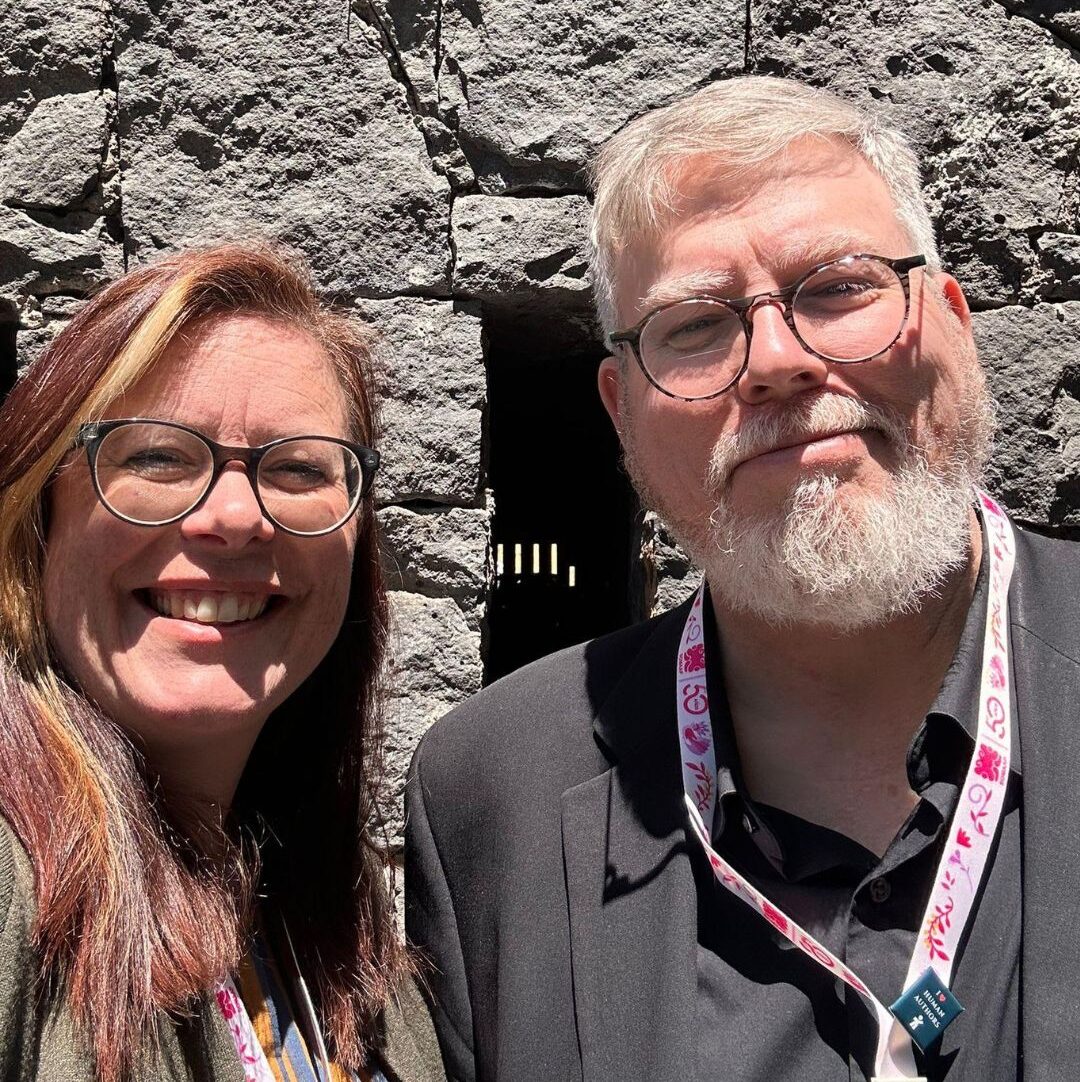
John Degen is a Canadian writer and photographer, proud SoA member and long-time advocate for authors’ rights. He serves as Chair of the IAF and is also CEO of the Writers’ Union of Canada. John works extensively on cultural policy and the protection of authors’ livelihoods in the digital environment.
In discussion of technology in general and AI specifically, cultural workers like authors are often depicted as frightened, willfully ignorant reactionaries who “just don’t understand the technology”.
That bit of criticism usually shows up when we ask pointed questions about how our rights and incomes are being treated.
So, for the record, around about 1992, some 34 years ago, as a graduate student at the University of Toronto, I was Lab Assistant to the brilliant (and now sadly departed) Professor Ian Lancashire, founder of the Centre for Computing in the Humanities (one of the greatest humanities computing labs in the world), and inventor of Text Analysis Computing Tools (or TACT).
Flowing from that work, in one very notable study, Dr. Lancashire used his tools to analyse the vocabulary of the murder mystery novels of Agatha Christie, finding what is now considered evidence in them of the onset and then progressive worsening of dementia in the British author.
This project has highlighted the study of vocabulary changes as a potential tool for dementia diagnosis. I suggest Professor Ian Lancashire’s work is what AI should be, an innovative computing tool used to better human life.
My job at the time, being a lowly assistant, was to scan entire texts of contemporary novels for use in the software and then very carefully go through the text files and correct the many, many mistakes made by the early machine-reading tool. That is how I managed to read John Irving’s The Cider House Rules – one of the bloody longest books ever written – about eight times that semester. It is still one of my favourite novels.
Extremely importantly, we never scanned work without asking for permission first from the rightsholder, which is how I one day found myself on the phone to Margaret Atwood telling her in a somewhat squeaky voice that the lab wanted to scan the entire text of The Handmaid’s Tale in order to analyse its vocabulary.
“For heaven’s sake, why would anyone want to do that?” she demanded.
And that, dear reader, is when I fell in love… with the fight for authors’ rights. I’d be lying if I said I understood all the implications of that early text scanning work, or anticipated the intense fights I myself would be engaged in around less ethical scanning projects. From Google Books though to Internet Archive and on to the big legal battles now being fought about training Large Language Models with pirated works.
My point is, we’re not frightened, we’re not reactionaries, and we do actually understand the technology. Some of us have actually worked on the technology. We just don’t believe humans come second to the technology. And we’re determined to see laws and regulations to reflect that belief in meaningful way.
In Canada, our main asks can be summed up by three words forming the acronym ART:
Authorisation: copyright laws oblige industrial users to obtain authorisation from the rightsholder prior to use, and this must remain the case.
Remuneration: we are at the dawn of a new licensing market, through voluntary, individual or collective licences. And so we demand of our governments: do not disrupt or destroy that market.
Transparency: companies developing and deploying generative AI systems should be required to disclose the training data used, explain how their models function, and document their sources. Content generated by an AI system should be clearly identified as such when made public.
We hear a lot of talk of ‘sovereign AI’ and, in the last Canadian election, of ‘cultural sovereignty’. I suggest that the collection of cultural workers in any given country are cultural sovereignty. Ask us how to make a sovereign AI… or better yet, how not to.
© John Degen, 2026
John Degen has recently registered his latest work with our Human Authored Scheme: Seldom Seen Road will be published by Latitude 46 Publishing on 7 May 2026.